
Gerbils
The Animal Rescue League adopts gerbils to be family pets. Under no circumstances should a gerbil be used for food for other animals, or be used for experimentation or laboratory work, or any other use other than as a family pet. The ARL strictly enforces this policy under the term of the adoption contract.
Gerbils: The Basics
Here you will find the information on basic needs for your gerbils. From handling guidelines to food, this list will provide you with a good start!
Health Care
Make sure you’re aware of the signs your gerbil may send when feeling ill, especially when it comes to Tyzzer’s disease.
Have a Happy Gerbil
Gerbil’s can be wonderful pets for children and adults alike. Make sure to read the do’s and don’ts of gerbil guardianship!
Health Care
Tyzzer’s disease is a common infectious disease found in gerbils. Symptoms include signs of a roughened coat, lethargy, and lack of appetite. Diarrhea may also be present. Tetracycline in the drinking water may prove beneficial. Gerbils also may experience seizure which exhibit as either convulsions or a hypnotic state. Convulsions last only a minute and are not fatal. No treatment is necessary. Red crusts may develop in the corners of the eyes resembling blood. This is merely a glandular secretion.
Suggestions for a Happier Gerbil
Handle and pet your gerbil daily; they love attention. They will soon recognize their care takers. Be careful to never drop your gerbil while handling it. Let your gerbil sleep during the day; they will awaken around 5 p.m. One reason they make such ideal pets for children is that they become active in the early evening when they can be enjoyed. Always supervise handling of pets by children less than 10 years of age.
The Basics
A gerbil’s life span is about 3-4 years. The gerbil is gentle, unafraid of people and happiest when kept in pairs or small groups, as they enjoy playing together. However, they may fight if overcrowded or mixed together as adults (10 weeks of age). Mature gerbils should have 36 square inches of floor space per animal (the ARL recommends housing only same sexes together to prevent breeding).
Handling Your Gerbil
The gerbil is not as apt to bite when picked up as some of the other small animals. An important point to remember in the handling of gerbils is never pull their tails. The tail could become detached. Gerbils may be picked up by holding your cupped hand near them; they will usually climb onto your palm. Wrapping your thumb and finger around their body between their legs and lifting them into your palm is another way to pick them up. Gerbils tend to resist being on their backs.
Cages and Equipment
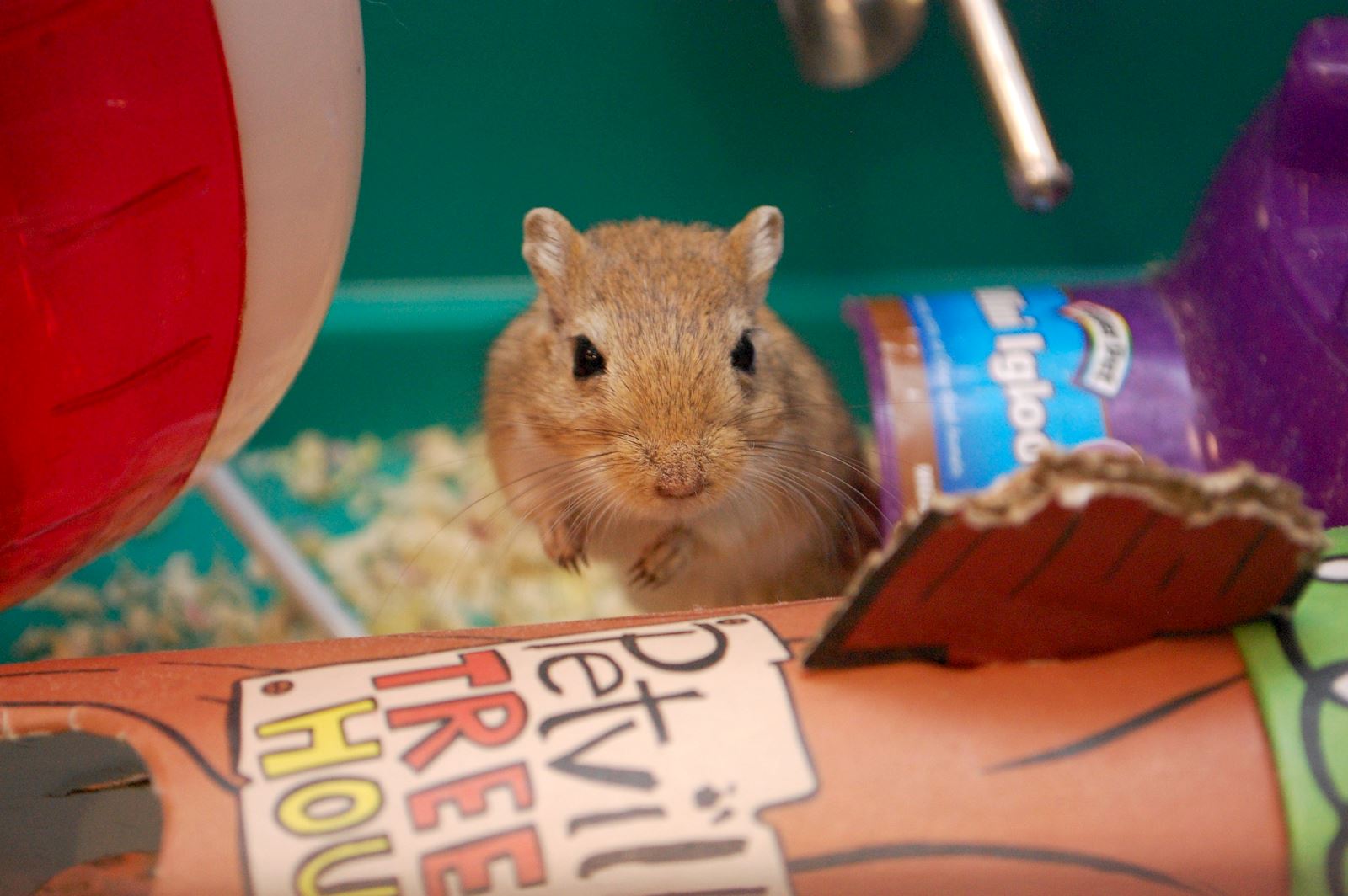
Gerbils should be kept in plastic or metal cages. Glass aquariums also make a suitable home for gerbils. When using an aquarium, purchase a locking screen hood for the top. Gerbils, like hamsters, enjoy using an exercise wheel and other toys. They will enjoy playing with almost any dog or cat toy. Wood chips make suitable bedding as gerbils like to burrow. Floor coverings such as chips work very well for this purpose. They also will build nests, so nesting material and bedding are good choices and will provide them with warm, comfortable nests.
Food
Feed your gerbil a well-balanced rodent chow. Treat them to small amounts of sunflower seeds, spinach or carrots occasionally. A crockery or metal dish for their food is a must. This keeps them from eating off the floor of the cage. You should use a water bottle and be sure they have a supply of fresh water at all times. Alfalfa cubes, as well as blocks of wood are good for your gerbil to gnaw on, preventing their teeth from growing too long. Be sure to periodically clean the cage and water bottle inside and out.